Construction cost rebound puts new-home price boundaries under scrutiny
Written by Hoome - Editor
Australian construction costs have rebounded while builders warn that confidence is faltering, Australian Property Investor Magazine reported on 21 July 2026. Construction costs cover the labour, materials and other delivery inputs required to build a home, so renewed pressure can affect the price and certainty builders are able to offer. The report signals a change in cost conditions, although the supplied evidence does not include an index, regional breakdown or percentage movement.
For sales teams, the immediate issue is not whether every home price should change. It is whether a buyer can tell what an advertised price covers, what remains variable and which selections could move the final budget.
The expectation gap can open before enquiry
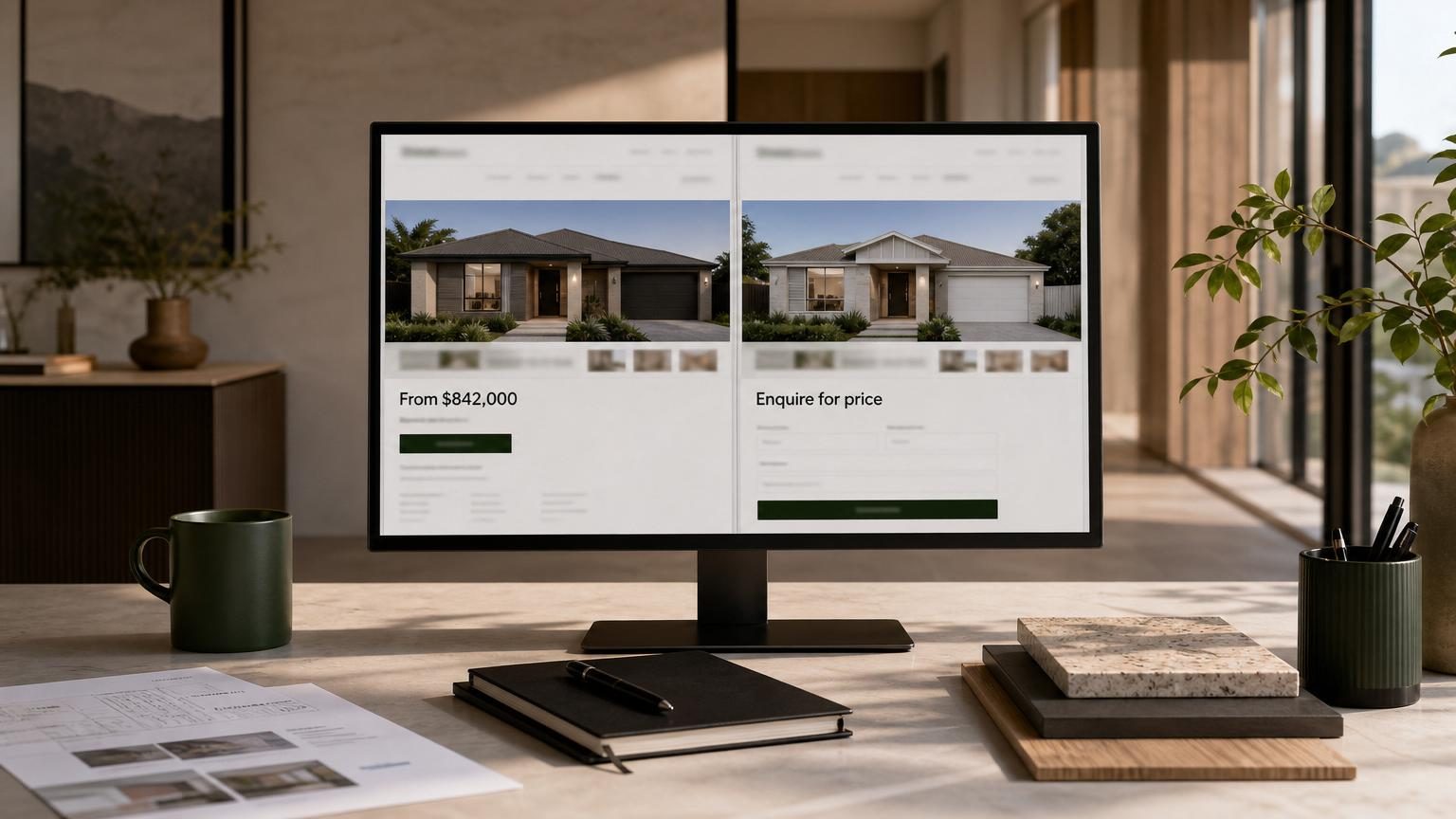
A starting price can attract attention while still leaving buyers with a larger question: is that figure a credible basis for their budget? When cost pressure is receiving attention, uncertainty about site requirements, inclusions and upgrades can become harder to defer until a sales appointment.
The supplied evidence does not establish that construction costs are causing buyer confidence to fall. The confidence warning comes from builders, rather than a buyer survey, and cost movements may differ by region, product and supplier. Even so, it gives sales managers a reason to inspect whether price uncertainty is already appearing in enquiries and objections.
The warning signs are usually operational. Prospects repeatedly ask what is excluded. Appointments spend more time resetting expectations. Leads withdraw after receiving a fuller price explanation, even when the eventual figure is commercially reasonable.
If those patterns are present, increasing lead volume will not repair the underlying problem. It may simply send more buyers into the same expectation gap.
Separate the price into three buyer decisions
The practical response is not a longer disclaimer. Builders can organise pricing information around three boundaries that buyers can understand before speaking with a consultant.
- Included in the advertised amount: Identify the home specification and inclusions that support the published figure.
- Variable before contract: Explain which items depend on the block, engineering, approvals or other project conditions, and when those costs can be assessed.
- Selected by the buyer: Distinguish optional upgrades and design choices from requirements needed to deliver the home.
Each boundary should answer four questions: what the item is, why it may affect price, when the amount becomes known and who confirms it. This gives buyers a usable path through uncertainty without promising a fixed outcome that operations cannot support.
It also gives consultants a consistent starting point. Instead of opening an appointment by correcting assumptions, they can confirm the buyer’s land position, budget and priorities against information already seen.
Use objections to decide whether the message is working
The sales manager should own a short objection taxonomy in the CRM, with categories such as unclear inclusions, site-cost concern, upgrade affordability and advertised-price mismatch. Marketing can then revise the pricing page and campaign message against observed objections rather than general concerns about confidence.
The primary measure is qualified enquiry-to-appointment conversion among buyers who viewed pricing or inclusions content. It should be read alongside the share of leads raising price-boundary objections. A lower objection rate with stable or improving appointment conversion is stronger evidence than page engagement alone.
Use the builder’s existing baseline rather than an invented industry target. If qualified enquiry-to-appointment conversion falls while advertised-price or exclusion objections rise, stop sending additional campaign traffic to the unchanged price journey. Review the promise, the inclusion explanation and the handover into sales first.
Do not answer cost pressure with blanket discounting
A rebound in construction costs does not by itself support widespread price cuts, nor does it prove that all buyers have become less willing to build. Discounting before diagnosing the objection can reduce margin while leaving the uncertainty intact.
The more defensible sales response is to make the price boundary visible earlier. Buyers do not need every project variable resolved on the first page. They do need to know which parts of the budget are firm, conditional or elective, and what happens next.